
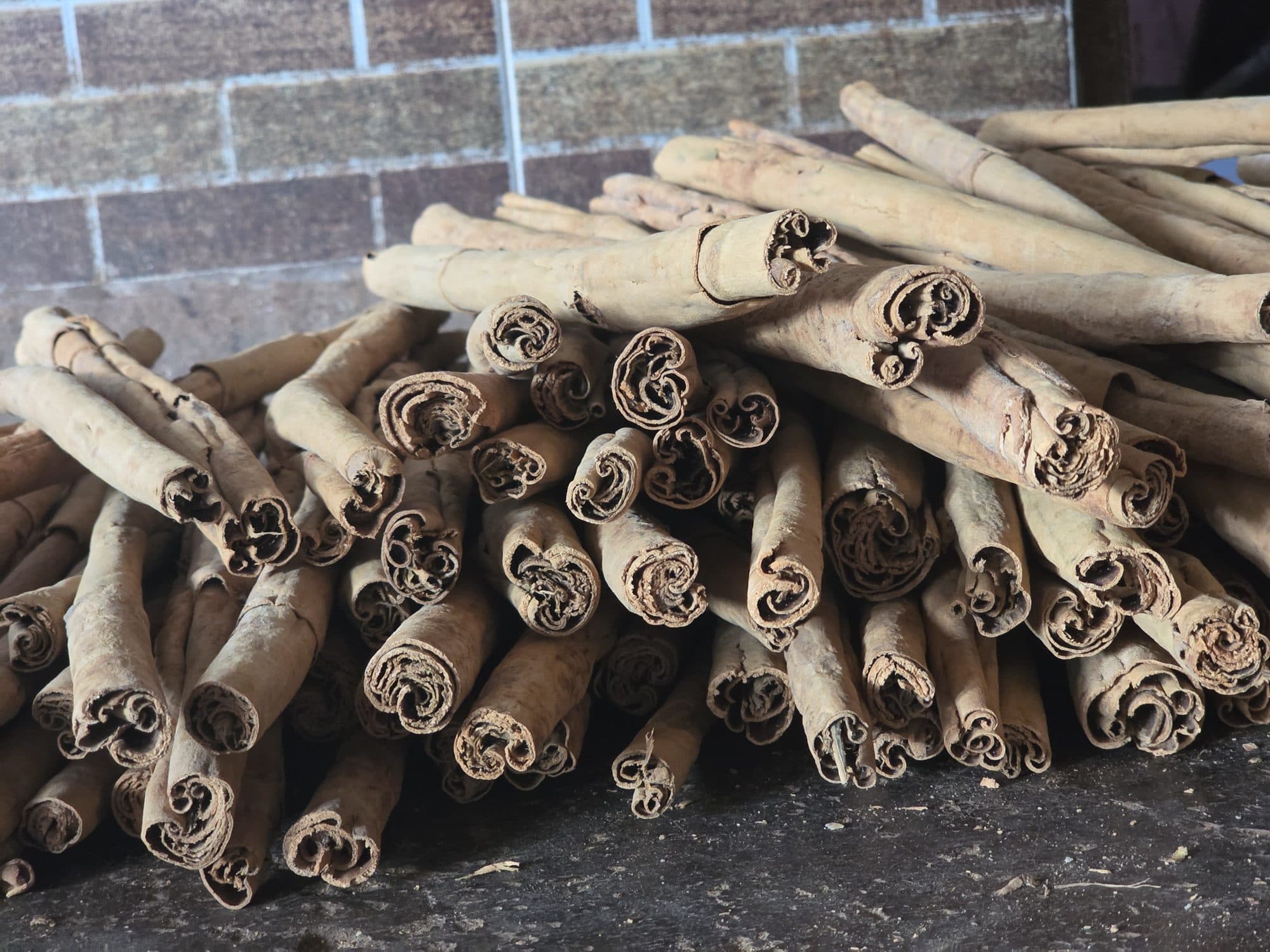
True cinnamon, from one island
Botanically, Ceylon cinnamon is Cinnamomum verum (also listed as Cinnamomum zeylanicum), an evergreen in the laurel family. “Ceylon” is the island's former name, and Sri Lanka remains the home of the species and its best-known producer.
The trees are grown as coppiced bushes: stems are cut close to the ground and new shoots rise from the same root, ready to harvest again in later seasons. On Sri Lanka's humid southern and western coasts — including Hikkaduwa, where our family works — cinnamon has been cultivated this way for generations.
How to recognise it
Whole Ceylon cinnamon is easy to identify once you know what to look for. Three things give it away:
- Quill structure
- Many paper-thin layers of bark rolled one inside another, so the end of a quill looks like a cigar rather than a single hollow tube.
- Colour & texture
- Light tan to golden brown, smooth, and brittle enough to crumble between your fingers.
- Aroma & flavour
- Sweet, delicate and warm, with soft citrus and floral notes rather than a hot, sharp bite.
How Ceylon cinnamon is made
Ceylon cinnamon is still peeled and rolled by hand. The traditional sequence, which we follow on our estate, runs like this:
- 01
Harvest
Mature stems are cut from the cinnamon bushes, usually after rain, when the bark lifts most easily.
- 02
Scrape
The rough outer bark is scraped away to reveal the pale inner bark underneath.
- 03
Peel
The inner bark is loosened by rubbing and peeled off the stem in long, thin strips.
- 04
Roll
Strips are layered one inside another and rolled into long quills, with smaller pieces used to fill them.
- 05
Dry & grade
Quills dry slowly in the shade, curling tighter as they do, then are cut and sorted by diameter into grades.
Graded by the width of the quill
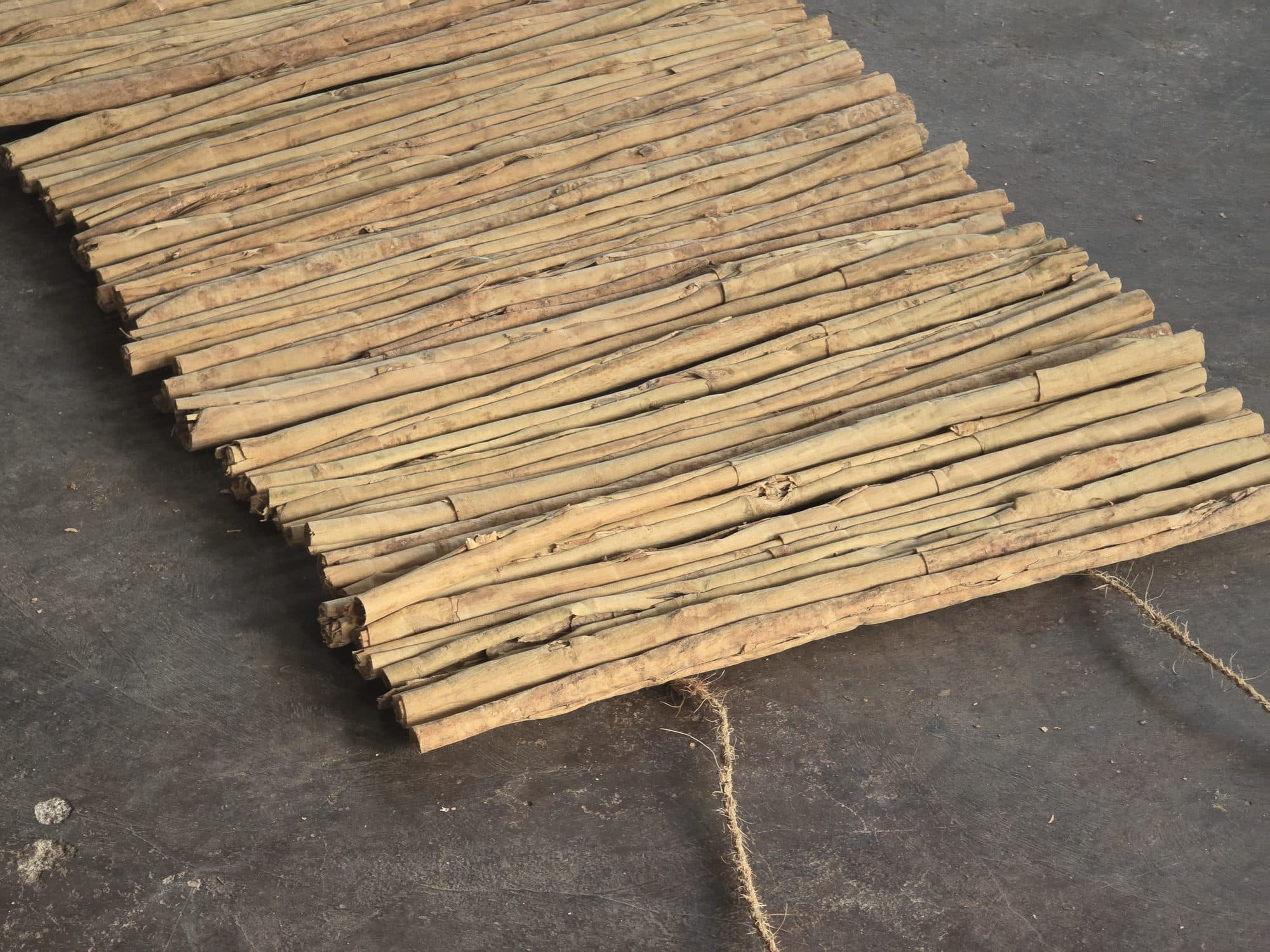
Sri Lanka grades cinnamon quills by diameter and appearance. The finest, palest quills are Alba; C5 Special and C4 are progressively fuller. The grade describes the cut, not the purity — all of them are Ceylon cinnamon.
- Alba≤ 6 mm — the finest cutFine desserts, specialty tea, gifting
- C5 Special6–10 mmSpecialty retail, café blends, baking
- C410–16 mmEveryday cooking, wholesale, food production
Ceylon cinnamon is not cassia
Cassia comes from related Cinnamomum species grown mainly in China, Indonesia and Vietnam. Its bark is thicker, harder and darker, it rolls into a single hollow curl, and its flavour is stronger and more pungent. Cassia also typically contains far more coumarin, a natural compound, than Ceylon cinnamon.
See the full comparisonBuying Ceylon cinnamon
- Look for the botanical name Cinnamomum verum or a Sri Lankan origin on the label — “cinnamon” alone often means cassia.
- Whole quills are the easiest to verify and keep their aroma longest; grind them only as you need them.
- Choose the grade by use: Alba for fine desserts and tea, C5 Special for baking and specialty retail, C4 for everyday cooking and larger volumes.
- Store quills and powder airtight, away from light, heat and damp.